
Space Management
section-1d40a15
“Ensures the appropriate allocation of Spatial resources & Analyze the existing use of the space by effectively apply transition planning management towards any applicable changes”
Space Management plays a vital role & satisfy the BIM LOD 350 criteria in Common Corridor areas as well as in specific discipline owned spaces.

GENERAL INTRODUCTION
- The purpose of this document is to propose a procedure that provides sufficient guidance to all discipline team members with respect to their obligations to support space management tasks, across evolving stages of the design and construction process.
- In addition, the document strives to provide suitably comprehensive technical recommendations that intend to standardize, philosophically, a space management plan that is appropriate for all Typical projects
- This procedure is not prescriptive in nature, though it does propose some specific default information, where such information will likely be beneficial to the team. When actual project data is available, need precise checks to validate default data

CORE RESPONSIBILITIES
- Overall Coordination For SPM’s Respective Areas
- Wall Openings Coordination
- Floor Openings Coordination
- Plinth Requirements
- Equipment Move In Details
- Pipe Rack Supports
- Clash Clearance
section-28a885c
COLLOBORATION SYSTEM IN BUILDINGS (TYP.)
- Common Pipe Rack System – (Link/Utility Bridge ,OSM , Common Corridor)
- Mechanical System – (HVAC,CHWT,EXHG,FIRE,NGAS,PVAC,PRWT,PCWT, PLUM,SANI,UGSV)
- Process System – (BGAS, SGAS, WWTS,CDDS,SDDS,WWCS)
- Electrical System – (BUSW,DBI,EQPT,GELE,GELECR. HV(LADD),LV(LADD)
- Instrumentation System – (DATA,FMCS,LSSP,PASP,SECS,FASP)
- Clean Room – (CEILING (FFU),UNDER RAISED FLOOR (PEDESTAL),PARTITION)
section-3356a61
UTILITY FAB (COORDINATION)
- Planning and allocation of Space for each service as per discipline / Run order Constraints in Utility Fab.
- Planning & Providing Common supports for Multi– disciplinary services
- Coordination & Interference check to be Carried out for each bay / Corridor area / Wall & Shaft Opening.
- Check / Maintain Minimum Height Clearance in Move – In / Access area.
- Checking appropriate horizontal clearance between Service to Service & Internal constraints also.

UTILITY FAB – CORRIDOR & COMMON AREA TYPICAL COORDINATION DETAIL
section-1a649bb
- For Utility overall Services coordinated by SPM.
- Common pipe rack for the services at utility FAB will be provided by SPM.
- M&E rooms SPM done by individual package owners and Pipe rack provided by themselves.

section-afc7b8e


- For M&E rooms over all Services coordinated by individual respective ownership of the Rooms
- Supporting bracket system for the services will be provided by individual team
- Elevation of the services ,they may differ based on the room’s size and client requirement
- Once Coordination done, SPM will check the details and issue back to them for circulate to all the teams for comments.
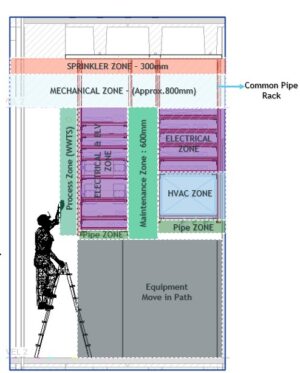
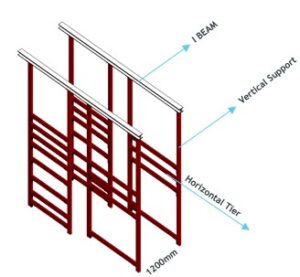
- For Corridors common pipe Rack will be providing by SPM
- Pipe Rack Design Confirmed by individual load of services running along the corridor.
- Type of Unistrut will be advised & Confirmed by Structural Team
- Must use Double Unistrut for both Horizontal Tiers & Vertical Column of Common
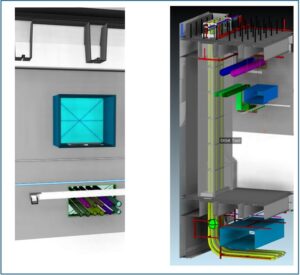
- Allocation / Proposal of openings as per requirement from M&E
- Coordination of Services in Wall / Slab opening
- Coordination in Riser along with other disciplines and submission of Riser Section detailing.
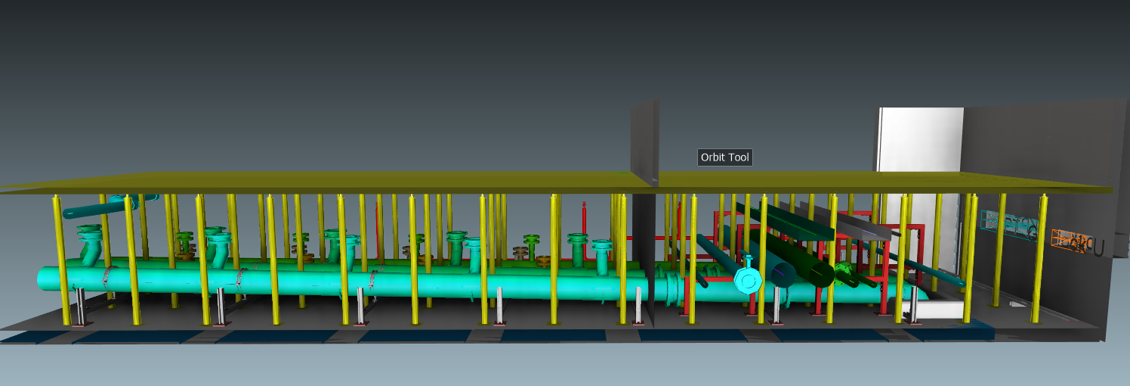
- Accommodated / Coordinated / Designated Runway for Tool Utility Piping / Trunking under the Raise floor at clean room area.
- Services Include Tool Drain, RODI Loop Piping, CHW-S/R as well as E&C Trunking etc.
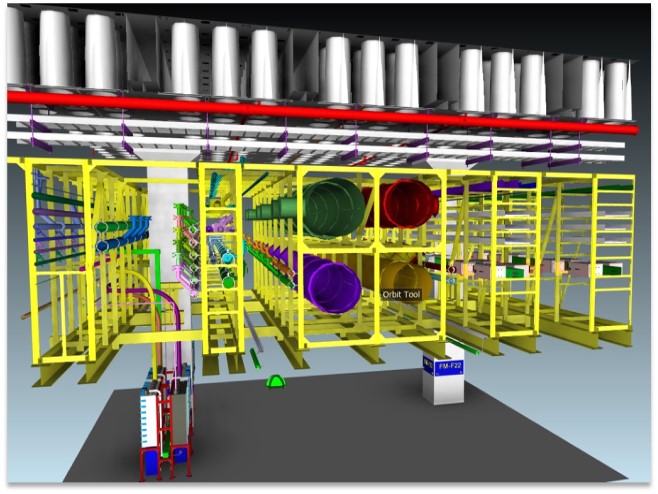
- Based on Concept of Off – Site Manufacturing (OSM), Space Management can be carried out in BIM by considering each & every discipline.
- Visually highlights where parts of the building (E.g., Process piping / Utility / Electrical) may wrongly intersect.
- Designated & Planned runway for individual discipline to avoid inference / Utilizing of Spaces in a proper manner / Sectional direction & issuing of Cad section details to follow up.
- Planning & Keep Clearance for the Tool Hookup Zone .
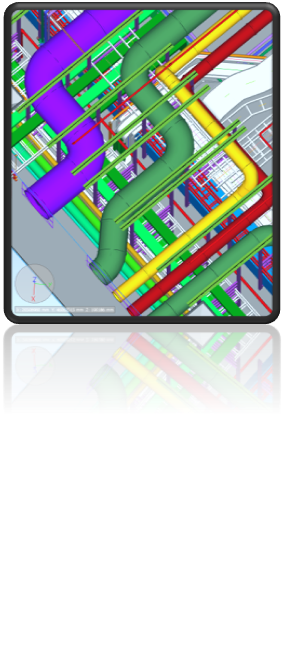
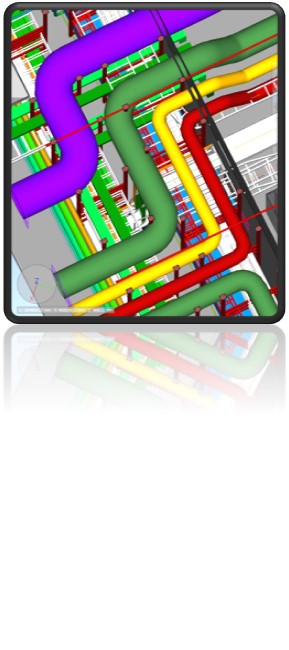
- Clash detection is an essential part SPM process, which is a process of creating a sophisticated model that consists of several different models from various engineering and design disciplines.
- Independent models are created by individual team modelers from ARCHI,STRUCTURE ,M&E and others. These models are then connected and integrated into creating a BIM model, which is precisely where clash detection comes in.
- Subsequently using Navisworks tools for prepare the clash report and from there will distribute to all the relevant team members to clear the clashes from specified locations.
section-353bd83
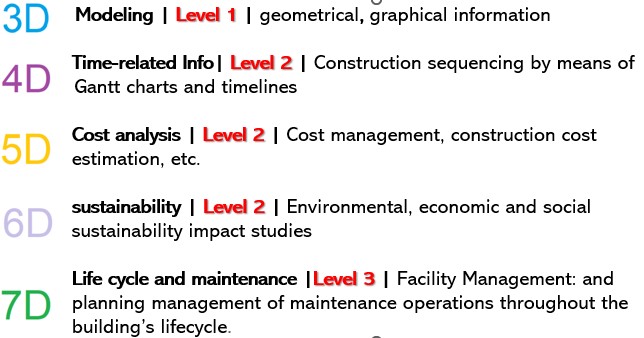
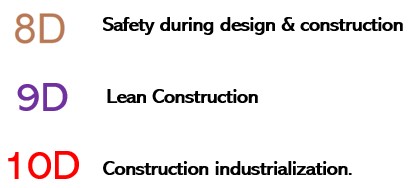
DIMENSIONS OF BIM
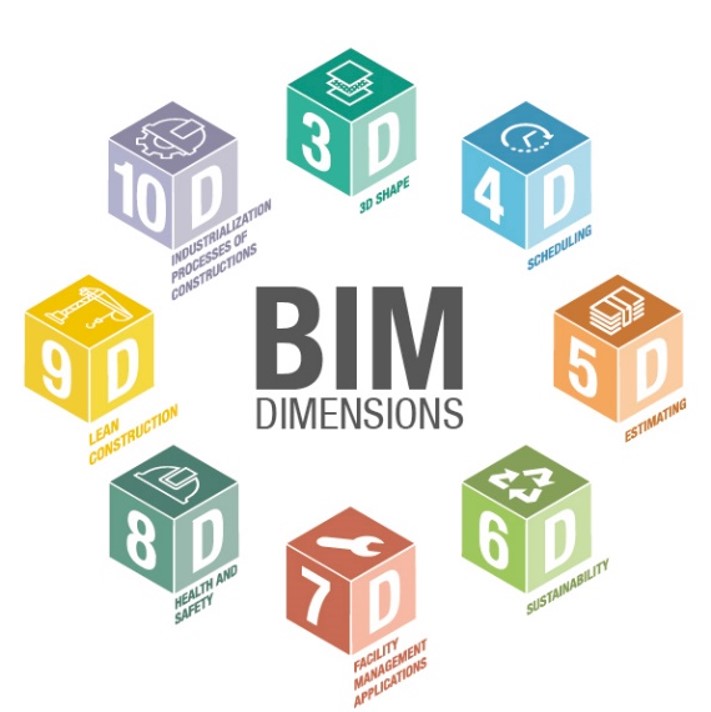
“An intuitive overview to outline the heterogeneity of the information flows involved in a BIM-based design “
Seven Recognized Dimension
© Oktan 2019 | Created with by Author